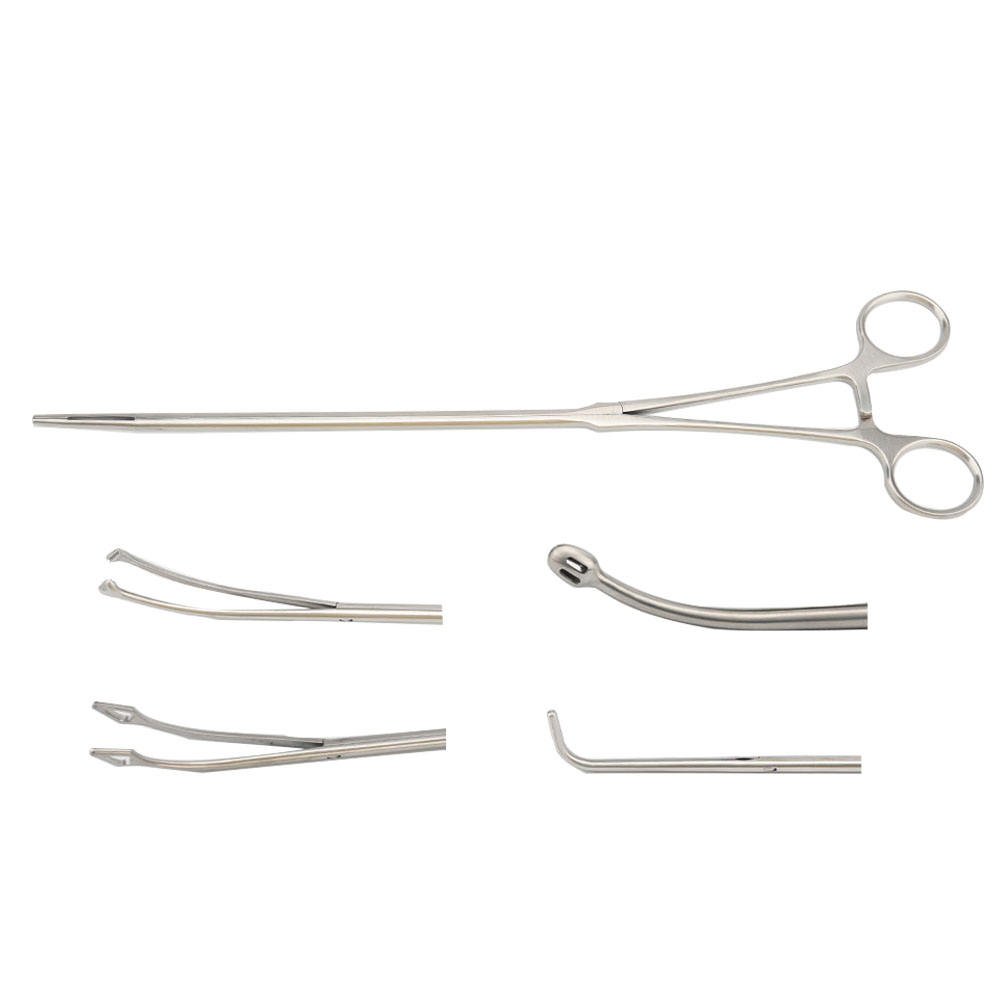
General surgery instrument sets can look overwhelming to a new distributor, but most catalogs break down into a handful of functional categories. This guide covers the common surgical instrument categories, the names you’ll see most often in a catalog, and what each group is actually used for — useful whether you’re building a balanced starting catalog or just trying to identify an instrument by name.
| Category | Examples | Function |
|---|---|---|
| Forceps | Allis, Babcock, Kelly, Kocher, Doyen | Grasping, clamping, holding tissue |
| Hemostatic Instruments | Artery / mosquito forceps | Clamping blood vessels |
| Scissors | Mayo, Metzenbaum, suture/bandage | Cutting tissue, sutures, dressings |
| Retractors | Army-Navy, Deaver, Senn, Balfour | Holding tissue/organs out of the surgical field |
| Needle Holders | Mayo-Hegar, Mathieu | Gripping a suture needle |
| Clamps & Sponge Instruments | Towel clamps, sponge holding forceps | Securing drapes, handling dressings |
| Sterilization Trays | Instrument trays, kidney trays | Organizing and sterilizing sets |
Forceps
Forceps make up a large share of any general surgery order, covering everything from tissue forceps and dressing forceps to specialized designs like Babcock or Allis forceps, each suited to handling different tissue types with the right amount of grip. For a full breakdown of every forceps type and what each is used for, see our complete surgical forceps guide.
Hemostatic Instruments
Hemostatic instruments, commonly called artery or mosquito forceps, are designed to clamp blood vessels during a procedure. These come in various jaw lengths and curvatures depending on the depth and location of the surgical site.
Scissors
Scissors are typically split by function: dissecting scissors like Mayo and Metzenbaum for delicate tissue work, and heavier suture or bandage scissors for coarser cutting tasks. The steel grade and edge geometry differ between these to match their intended use — see our surgical scissors guide for the full breakdown.
Retractors
Retractors hold tissue or organs out of the surgical field and range from simple hand-held designs to larger self-retaining frames. Army-Navy retractors are a compact double-ended hand-held design common in general surgery; Deaver retractors have a broad, curved blade for retracting larger organs in deeper cavities; Senn retractors are small, double-ended and used for shallower, more superficial work. Self-retaining frames like the Balfour retractor hold tissue open without an assistant needing to hold them by hand, common in abdominal procedures.
Needle Holders
Needle holders round out most general surgery sets, designed to grip a suture needle securely without damaging it, with variations in jaw texture and handle length depending on the procedure.
Clamps and Sponge Instruments
Towel clamp forceps secure surgical drapes around the incision site, while sponge holding forceps move gauze and dressings through the sterile field without direct hand contact.
Sterilization Trays
Every instrument in a general surgery set eventually needs to be organized, sterilized and stored, which is where instrument trays and kidney trays come in — see our sterilization tray range.
Frequently Asked Questions
What are the main categories of general surgery instruments?
Forceps, hemostatic instruments, scissors, retractors, needle holders, clamps/sponge instruments, and sterilization trays cover the vast majority of a general surgery catalog.
What instruments are in a basic general surgery set?
A typical basic set includes forceps (tissue and hemostatic), scissors, a needle holder, retractors, towel clamps, and a sterilization tray to hold the set.
Understanding these categories helps when building a balanced starting catalog rather than ordering a random assortment. Our general surgical range covers all of the categories above and can be quoted as individual products or as grouped sets depending on your market. WhatsApp Us