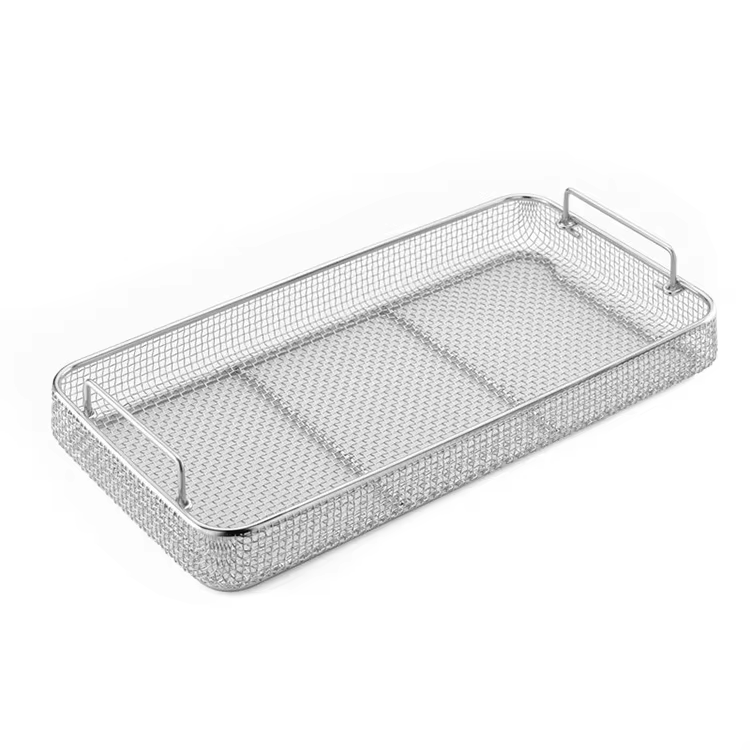
Every instrument in a surgical set eventually needs to be cleaned, organized and sterilized before its next use, and that’s the job a sterilization tray does. It sounds simple, but the wrong tray choice can slow down a CSSD (Central Sterile Services Department) workflow or even damage delicate instruments. Here’s what to look for when sourcing sterilization trays.
What Is a Sterilization Tray?
A sterilization tray is a rigid, corrosion-resistant tray — almost always stainless steel — used to hold, organize and transport instruments through the cleaning, packing and autoclave sterilization process. Unlike a simple storage box, a sterilization tray is designed to survive repeated high-temperature and high-pressure autoclave cycles without warping, discoloring or corroding. See our stainless steel guide for why the grade of steel matters here as much as it does for the instruments themselves.
Solid Bottom vs. Perforated Bottom Trays
The two most common tray types differ in how they handle steam and drainage during sterilization. A perforated-bottom tray allows steam to circulate freely around every instrument and lets condensation drain away, which is generally the better choice for full sets going through autoclave cycles. A solid-bottom tray holds instruments securely without gaps and is often used for smaller kits, delicate instruments, or when a tray needs to double as a presentation or storage container outside the autoclave. See our Perforated Bottom Sterilization Tray and Solid Bottom Sterilization Tray.
Sizing for Your Instrument Sets
Tray size should match the instrument set it’s built for — too large and instruments shift and clatter during handling, risking damage to fine tips; too small and instruments overlap, which can trap moisture and prevent proper sterilization contact. Distributors building kits (see our general surgery instrument categories guide) should size the tray to the specific set rather than defaulting to one universal size.
Dental and Specialty Trays
Dental practices typically need smaller, more compact trays sized for extraction, restorative and periodontal kits rather than a full general-surgery layout. See our Dental Sterilization Tray.
Quick Comparison
| Tray Type | Steam Circulation | Best For |
|---|---|---|
| Perforated Bottom | Excellent, drains condensation | Full instrument sets, autoclave-heavy workflows |
| Solid Bottom | Limited | Small kits, delicate instruments, presentation trays |
| Dental Tray | Depends on style | Compact extraction/restorative/periodontal kits |
Frequently Asked Questions
What is the best tray for sterilizing surgical instruments?
Perforated-bottom stainless steel trays are generally preferred for full instrument sets going through autoclave cycles, since they allow better steam circulation and drainage than solid-bottom trays.
Can the same tray be used for storage and sterilization?
Yes, solid-bottom trays are often used for both, though perforated trays are still the better choice specifically during the autoclave cycle itself.
All ASONS SURGICAL sterilization trays are manufactured in medical-grade stainless steel at our Sialkot facility. Browse the full sterilization tray range or WhatsApp Us